
Bia is being actively researched in partnership with the University Of Utah. Please contact us with any questions, feedback, or research interest.


Phobia
A phobia is an intense fear of an object or situation that negatively impacts a persons quality of life. Almost 10% of the worlds population suffers from phobia, making it one of the most common mental disorders1. Phobia is treatable, however, many individuals experience poor treatment or require multiple attempts to recover2.

  1. The cross-national epidemiology of specific phobia in the World Mental Health Surveys
  2. Perceived helpfulness of treatment for specific phobia: findings from the World Mental Health Surveys

Bia is designed to make phobia treatment easier, more accessible, and more affordable.

Research, talks, and partners

The evidence and the people behind Bia.

Mini-skills presentation - NASP 2026
Bia at the NASP 2026 conference

Filling the Gaps: Emetophobia Assessment and Treatment in Schools

Lagunas, N., Thompson, A., Schuler, C., Arenare, L., & Schaller, W.

National Association of School Psychologists, 2026
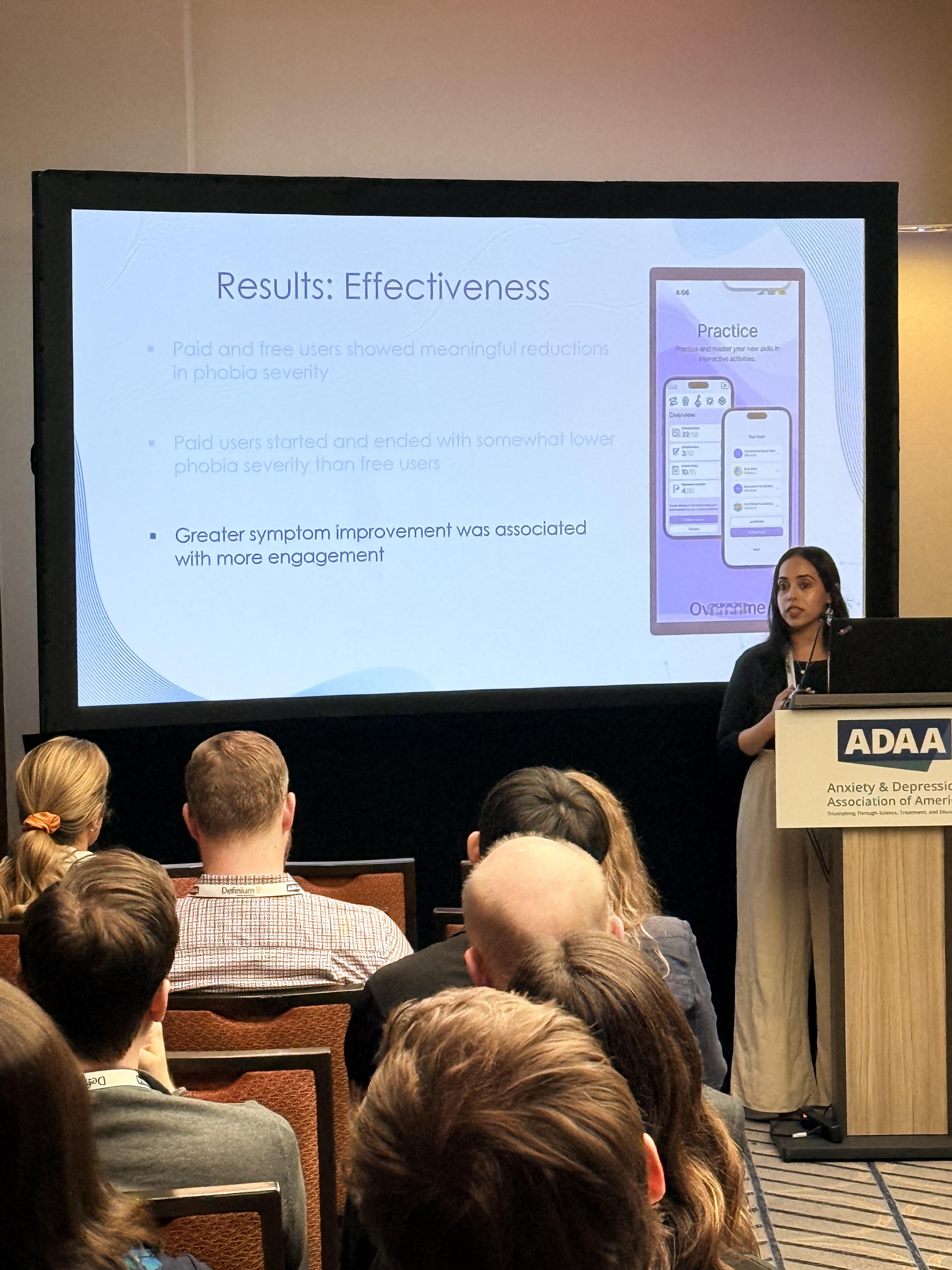
Symposium - ADAA 2026
Bia at the ADAA 2026 conference

Innovations in Digital Care for Emetophobia: Findings from Bia, a Self-Guided Program

Kaur, K., Asnaani, A., Lagunas, N., Franklin, B. E., Yusko, D., & Schaller, W.

Anxiety and Depression Association of America, 2026

Research Partner

University of Utah

Research Partner, Manuscript under Review
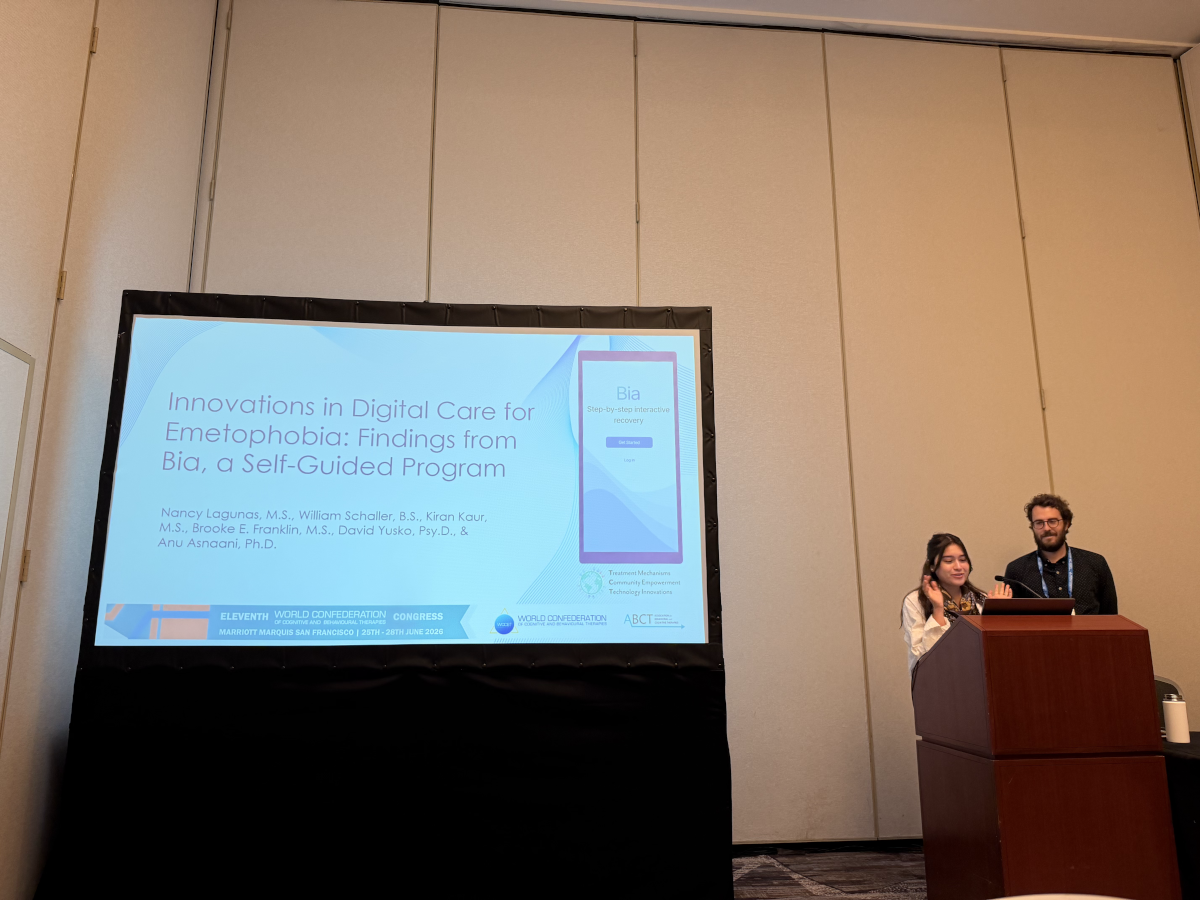
Paper presentation - WCCBT 2026
Bia at the WCCBT 2026 congress

Overcoming emetophobia with a journey through Bia: Examining the effectiveness and uptake of an online self-guided, evidence-based treatment program

Lagunas, N., Schaller, W., Kaur, K., Franklin, B. E., Yusko, D., & Asnaani, A.

World Confederation of Cognitive and Behavioral Therapies Congress, 2026

Clinical Partner

Center for Anxiety and Behavior Therapy

Clinical Partnership, The Emetophobia Institute

Interested in partnering on research?

We collaborate with clinicians and researchers advancing exposure therapy. Bia's powerful client app and clinician portal provides significant data and opportunities to improve exposure. Please reach out anytime.

willy@biajourney.com

Filter by Tag

All
Case Study
Survey
Clinical Trial
ACT (Acceptance and Commitment Therapy)
ERP (Exposure and Response Prevention)
CBT (Cognitive Behavioral Therapy)
OCD (Obsessive-Compulsive Disorder)


Research references
Title Year Tags Link
A Transdiagnostic Approach to the Treatment of Emetophobia: A Single Case Study 2018
Emetophobia
ERP
CBT
Case Study
Exposure therapy for emetophobia: A case study with three-year follow-up 2013
Emetophobia
ERP
CBT
Case Study
Cognitive-Behavioral Treatment of Emetophobia: The Role of Interoceptive Exposure 2009
Emetophobia
ERP
CBT
Case Study
Cognitive-Behavioral Treatment of an 11-Year-Old Male Presenting With Emetophobia: A Case Study 2010
Emetophobia
ERP
CBT
Case Study
A Cognitive Behaviour Therapy For Specific Phobia of Vomiting (Emetophobia): A Pilot Randomized Controlled Trial 2016
Emetophobia
CBT
Clinical Trial
Case Study of Acceptance and Commitment Therapy and Functional Analysis for Emetophobia 2016
Emetophobia
ACT
Case Study
Competence Imagery: A Case Study Treating Emetophobia 2005
Emetophobia
ERP
Case Study
Safety behaviour enhances the acceptability of exposure 2014
OCD
ERP
Clinical Trial
Emetophobia: preliminary results of an internet survey 2001
Emetophobia
Survey

Bia
Bia lowers the barrier to the path of recovery by providing a self-driven set of lessons and activities in a safe environment. Bia teaches you key concepts from Exposure and Response Prevention (ERP), Acceptance and Commitment Therapy (ACT), and Cognitive Behavioral Therapy (CBT) and applies those concepts in interactive exercises in a simple web tool that encourages regular practice, dynamically adapts to your input, and tracks overall progress. Bia measures progress by recording anxiety levels in response to triggers, and aims to reduce or eliminate your anxiety response.

If you are currently in therapy, Bia can be a great tool to help you apply your skills and track your progress. If you are considering therapy, Bia is a good place to start and learn what is possible.